They have a dream. The founders of the American Association of Water and Wastewater Professionals (AAWWP) picture a world where treatment operators will have access to a broad, structured curriculum of courses that can help them meet specific education objectives.
They also envision operators having fun during the classes and leaving with a great deal of new knowledge they can immediately apply at work. And finally, they foresee operators gaining more respect for being the professionals they are, and for the essential work they perform.
The AAWWP began in Richmond, Va., offered its first classes in October 2009, and is now building a curriculum and pilot-testing it in Virginia. In time, its leaders hope to expand the program to other states and, eventually, the nation. The association is a for-profit entity with three founders:
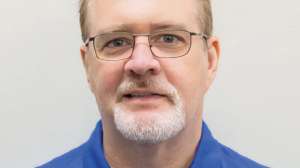
• Terry Looney, president, owner of STX Inc., a company in Richmond that designs, builds and equips laboratories with analytical instruments.
• Dennis Campbell, vice president of education, owner of X2O Inc., a Roanoke-based distributor of specialty chemicals, pumps and equipment to small and mid-size wastewater treatment plants.
• Douglas Crooks, vice president of field services, a long-time water and wastewater treatment operator, manager and industry consultant, and division director of wastewater treatment facilities with Spotsylvania County Department of Utilities.
The three are now hiring instructors to develop and teach classes. Looney talked about the organization and its mission in an interview with Treatment Plant Operator.
TPO:
Why did you see a need to start this organization?
Looney:
When we started, we learned that new state regulations were going to require more education for wastewater operators. The Department of Professional and Occupational Regulation already required water operators to have continuing professional education credits. As of March 1, the same applies to wastewater operators.
When you look at education in the water and wastewater world, you find that it’s about getting CEUs. It’s about collecting units. You just have to endure a class for a day, whether you learn anything or not, and get your credits. We thought that wasn’t right.
TPO:
Is education the only mission of the AAWWP?
Looney:
Education is important in these early stages, but it’s only one part of the program. In the bigger picture, we want to help increase the value and perceived value of water and wastewater operators.
After Sept. 11, everybody began to realize how valuable police officers and firefighters are. Well, what would happen if the wastewater operators didn’t go to work for a week? Nobody seems to recognize these people. They’re unsung heroes.
Our bigger agenda needs to be to raise the visibility of this industry. The only way we’re going to do that is to raise these people’s self-esteem, raise their own expectations of their professionalism, and offer classes to enhance that value. That’s why we called our organization by such a long 5-letter-acronym name — because we wanted that word “professional” in there. We think that’s the whole key to this.
These people to a large degree operate in the back room. It’s not necessarily a career they’re proud of — but they should be proud of it, and instilling that pride is a mission everyone in the industry should have.
Our goal is to have the most value-laden programs out there, and that means they are expensive. That’s why we’re developing partnerships with some of the big players in the industry, like Thermo Fisher Scientific, Hach Co., Thermo Scientific Orion, SNF Polydyne and Phipps & Bird.
TPO:
There are many training programs for water and wastewater operators. How are your programs different?
Looney:
When we look at training programs in the industry, we see that there are many fine programs and a number of truly excellent instructors, but in the big-picture view there is a lack of consistency. This course is free, that one costs $300. This one is at a trade show, that one is by correspondence. We saw a need for more high-quality, goal-directed, professional education.
We asked: What if we could develop a curriculum where after you take classes for two or four years, you reach some recognizable objective? Now you’ve got something of value that is transferable within the industry. Of course, we’re not at that point yet.
Over and over, we hear that water and wastewater agencies have training budgets, but in this economy they have virtually no travel budgets. So we want to bring the training to them. You can go to a hotel somewhere and take a class, but that’s not a good hands-on experience. We’re trying to bring that kind of thing close to the client.
TPO:
Your Web site talks about a unique and fun approach to training. Why do you think that’s so important?
Looney:
We continually hear feedback that operators endure classes, but they don’t enjoy classes. Training is not inherently fun. Most people don’t go to class looking forward to it. We want to change that experience. People learn by having a good time and hearing real-world scenarios.
TPO:
How does this approach play out in practice?
Looney:
We just finished a class for the Western Virginia Water Authority in Roanoke. They had us do a regional class, and people from a few other cities were there. We worked cooperatively with them to put on the program at their facility. We brought in jar testers and other equipment and conducted a hands-on program. It was two days of training. There was a full day of lab analysis. The second day focused on process. It was a great example of what we’re trying to put together. It was a huge success.
We go out of our way to make sure people have a good time. We did our first classes at a Bass Pro Shops store in a conference room upstairs. The Bass Pro people turned on the shooting arcade in the store for a half-hour over the lunch break and let the guys have a little fun.
We build a team environment and we do a lot of hands-on work. We go into a classroom session for maybe 30 or 40 minutes, and then we have a 20- or 30-minute lab. We have a binder of training materials that we give to each individual. We try to take it up to a level that we feel is simply appropriate for training professionals.
TPO:
What does your course curriculum look like now?
Looney:
We have two classes in biological nutrient removal, a two-day lab class, a two-day process class, a basic operations class that is like an overview or refresher, and a math class that has been extremely well received. Among operators, we have had a huge demand for math education.
Jack Vanderland, who is retired from the Virginia Department of Environmental Quality, wrote that class and is sometimes also the presenter. Everybody gets a calculator. Everybody is working on problems. Even math can be fun if you make it fun.
It’s all about doing. Jack will put up a picture of a pipe and have the class calculate the volume of the pipe and the flow through the pipe. They work on practical problems that relate to what they do day in and day out.
TPO:
Who else is involved in developing your classes?
Looney:
They’re developed by industry professionals. John Hricko, who is plant manager at the Town of Crewe treatment plant, wrote the refresher course in operations. He’s also writing a two-day BNR course. Tim Jenkins, chief operator of wastewater treatment facilities for Spotsylvania County wastewater, wrote our basic BNR class.
By the end of this year, if all goes as planned, we will have offered a total of about 50 days of training classes. These are all hands-on courses. When you write a class for us, or if you’re going to be the one who presents it, we want to see some passion. We want to hear anecdotes. Want to hear stories from your experience. Let’s make this thing real and meaningful. Let’s provide some real education.
Several industry-leading suppliers have helped us underwrite the costs of this training by providing us with equipment and supplementing hard costs for the courses. While we have a strong commitment to these partnerships, there will be no promotion of any company’s products in our classes. This is not about selling products — this is about education. Our partners understand and strongly support that agenda.
TPO:
How do you see the curriculum developing in the next several years?
Looney:
Ultimately I envision it looking like a college catalog. In college, you have 100-level courses, 200-level courses and on up. Certain courses at the 300 level have 100-level courses as prerequisites. We envision something with a similar structure.
TPO:
How do you plan to expand beyond Virginia? Is there a timetable?
Looney:
We’re using Virginia as our beta test. It’s fair to say we’d like to complete the Virginia-specific testing by the first of the year and be ready to expand into other states. How many states would be in the first wave, we don’t know yet. We’ll test the waters carefully. We prefer to do a good job where we are and move gradually forward.
So far we’re getting incredible feedback. We offer anonymous evaluations after each class. People are saying things like, ‘Wow, that was the best class I’ve ever had.”
TPO:
How does all this further the aim of raising the status of the industry?
Looney:
Our product — training — is really a means to an end. The end is to promote this industry. Ultimately, 20 years out, we’d love to be able to say we helped drive public recognition of the role these operators play, and helped drive legislators and decision makers to allocate more funds to allow them to do a better job.
And there’s another critical issue: It is estimated that for every three people planning to retire from the water and wastewater world, there is only one replacement candidate. Isn’t that largely because of the prevailing perception of this industry? We need to change that. We have a long way to go, but if we continue to get the kind of support we’re getting and keep forming relationships, I think we can make a real difference.