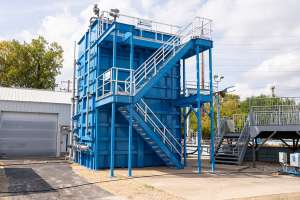
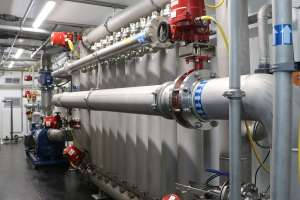
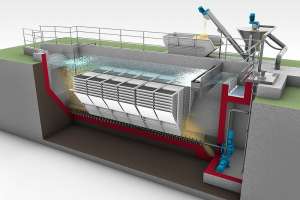
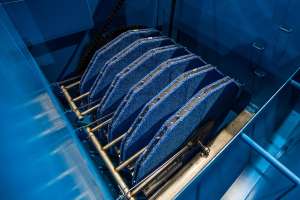
Controller solves facility’s chromium contamination problem
Problem: An FAA Certified Part 145 Repair Station maintenance repair overhaul facility was unable to discharge to their...
Entries Tagged Laboratory
Online Exclusives
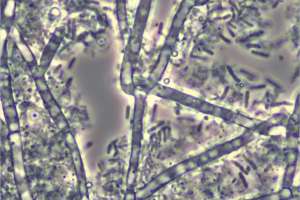
Bug of the Month: The Mysterious History of Haliscomenobacter Hydrossis
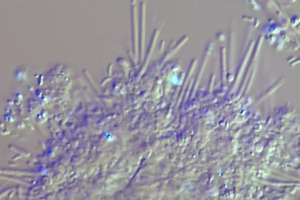
The Eickelboom filament morphotype commonly recognized as Haliscomenobacter hydrossis has a long and somewhat mysterious history.
Its recognized growth cause has changed from...
Online Exclusives
Wastewater Sequencing Provides Early Detection of COVID-19 Variants
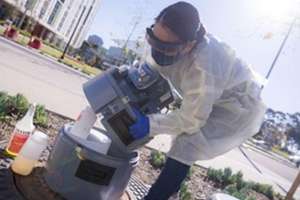
Writing in the journal Nature, scientists at the University of California San Diego and Scripps Research, along with local and federal public health officials, describe how...
Editorial
Starting Out as an Immigrant Was Challenging. This Lab Tech Cleared the Hurdles and Found Success.
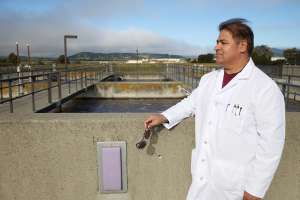
Joga Chizer had no kind of background for the clean-water industry. As an immigrant, he wanted a job. He found an opportunity...
Online Exclusives
Bug of the Month: Meet Daphnia, the Crustaceans of Lagoon Treatment
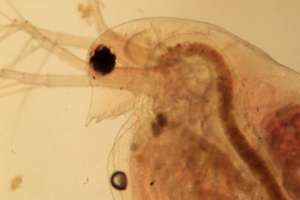
Daphnia are a genus of crustaceans, and while they are rare in activated sludge processes, they are commonly found in wastewater lagoon...
Online Exclusives
Bug of the Month: What To Do With Fungi in Wastewater Treatment
Fungi at low levels are common or insignificant and often incidental visitors to wastewater treatment processes, although at higher abundance fungi may indicate...
Online Exclusives
Bug of the Month: Filament Type 1863 and FOG
Eickelboom filament type 1863 is most commonly observed dispersed in solution or occasionally near the edges of the floc at 1000x oil-immersion...
Online Exclusives
Graphene Sensor Rapidly Detects Opioid Metabolites in Wastewater
The unique properties of the atom-thick sheet of carbon known as graphene have enabled a new penny-sized, multiplexed bio-sensor that’s the first to...
Online Exclusives
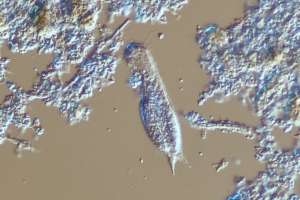
Bug of the Month: Gastrotrich, an Occasional WWTP Visitor
Gastrotrich are invertebrates occasionally found in wastewater treatment systems. Generally their presence indicates good overall health, and they tend to occur in...
Editorial
We Are Family
In 2020 when the North Woodstock Wastewater Treatment Plant won a U.S. EPA Regional Excellence Award, it was a career cap of sorts...
Editorial
Constantly Learning. Always Adapting. Those Are the Keys to This Lab Leader's Success
“Once you get into wastewater, you don’t leave.”
That’s Amanda Tobin’s observation after nearly 18 years in laboratories, 16 of them devoted to wastewater....
Online Exclusives
Best of 2021: Operators Offer Top Strategies and Advice
One of the best things about the wastewater treatment industry is operators' and lab technicians' willingness to share stories, advice, know-how and new technologies...
Online Exclusives
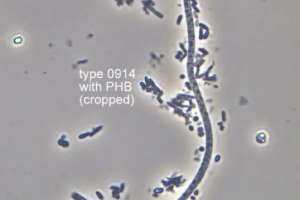
Bug of the Month: Filament Type 0914 and the Importance of Correct Diagnosis
Filamentous bacteria Eickelboom morphotype 0914 is one of the most common filament types observed in all activated sludge treatment processes. Morphological features to...
Online Exclusives
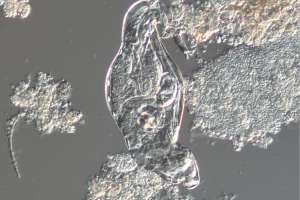
Bug of the Month: Rotifers, the Algal Predators of the WWTP Lagoon
Rotifers are more complex than protozoan (classified as metazoan) and exist in a wide range of shapes and sizes. The taxonomic classification...