As artificial intelligence gains attention across the water and wastewater sector, many utilities are looking past the hype to understand its real operational value. Rather than relying on large, energy-intensive models, Aquatic Informatics is focused on purpose-built intelligence that combines water science with targeted machine learning to improve efficiency and support better decision-making.
Kevin Lysyk is the chief technology officer at Aquatic Informatics and has over 20 years of leadership experience in engineering and product management. In the following Q&A with Treatment Plant Operator, he explains how Aquatic Informatics' approach helps utilities tackle data quality challenges, optimize processes and stay ahead of compliance requirements. He also discusses how AI is reshaping the operator’s role, shifting the focus from reactive troubleshooting to proactive, data-driven optimization without replacing human judgment.

TPO: The term "AI" as it's colloquially understood carries implications about large language models and massive energy-intensive data centers. How does Aquatic Informatics’ approach differ, and why should operators care?
Lysyk: We build intelligence that is purpose‑built for water operations, not general‑purpose AI. This means we have a much smaller footprint than large language models. Our approach blends proven physics and rules‑based models with targeted machine learning where it clearly improves outcomes. That hybrid design delivers value immediately using decades of water science, while keeping operators in control.
For operators, this means reliable, auditable decision support rather than black‑box automation. Tools that suggest energy and chemical‑saving adjustments, but the operator always decides what to implement.
TPO: For operators wary of AI hype, how do you communicate real-world value?
Lysyk: Our customers don’t necessarily care if we use AI or not. Operators asked us to reduce repetitive work, lower cost and minimize risk, so that is where we focused first. We lead with real operational problems, not algorithms.
We are also explicit about boundaries. Our systems do not run the plant. They provide forecasts and recommendations grounded in process understanding, and operators decide what actions to take. That clarity builds trust and adoption.
TPO: Where are you embedding machine learning or AI today, and what new capabilities are customers seeing?
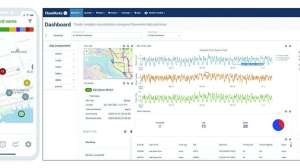
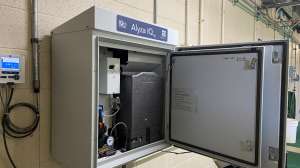
Lysyk: We apply AI where it delivers measurable outcomes. Improving data quality by detecting drift and anomalies and recommending corrections. We can help operators understand the health of their sensors, reduce plant downtime and proactively repair and replace their devices. AI allows us to support process optimization by suggesting blower and dosing adjustments based on historical data and proven models.
Predictive analytics also help forecast compliance risks earlier, giving teams time to intervene. Digital twins allow operators to test what‑if scenarios before making changes to give them the confidence they need to understand cost impacts while focusing on adhering to compliance and regulations.
TPO: What are the most common data quality challenges, and how can operators address them?
Lysyk: The most common issues are sensor drift, spikes, gaps and miscalibration. These problems quietly undermine analytics and any machine learning layered on top. Digital QA and QC tools detect anomalies early, log corrections with audit trails and maintain a calibrated historical record. That improves confidence in daily decisions and makes future predictive models far more reliable.
TPO: How can machine learning help operators stay ahead of regulatory reporting and compliance requirements, and what limitations should they be aware of?
Lysyk: ML helps by providing early warnings. It can forecast potential exceedances, surface unusual trends and flag conditions before they become violations. Digital twins then allow teams to test operational changes without risking compliance.
The limits are data quality and volume. That is why we use hybrid models and keep operators responsible for final decisions. AI supports compliance, it can’t replace human judgment right now, but it can reduce the noise to allow operators to focus on higher priorities.
TPO: In critical water infrastructure, reliability is of the utmost importance. How do you validate AI recommendations for operational safety?
Lysyk: We validate in layers. First, we ensure data integrity through digital QA and QC and audit trails. Second, recommendations can be evaluated alongside existing procedures before they are relied on. Third, operators always review predictions and decide what to act on. We will always have safeguards to prevent harmful recommendations. Finally, digital twins allow recommendations to be tested in a virtual environment before implementation.
TPO: As AI becomes more common in water and wastewater management, how do you see the role of operators changing?
Lysyk: AI handles data‑heavy analysis so operators can focus on proactive optimization and higher‑value decisions. Instead of reacting to issues after they occur, teams use forecasts and alerts to stay ahead.
Operators retain final authority over process changes. As the workforce evolves, modern interfaces help onboard new staff while preserving the expertise of experienced operators. Operators will spend less time troubleshooting and sifting through data, and more time improving the efficiency and throughput of their plant.