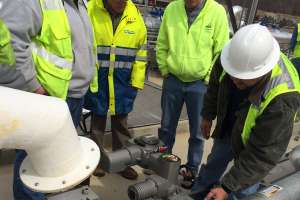
DC Water reports that work is progressing to meet the mid-March target to return flow to the Potomac Interceptor following the catastrophic break and spill in January. The utility also reports more than 31 days have passed with no overflows reaching Washington, D.C.'s Potomac River.
Geopolymer applied to the upstream and downstream sections of the pipe has cured, reinforcing the pipe and ensuring structural integrity, officials say. They noted that while the repaired pipe is ready for flow, additional work is necessary to seal the excavation sites. Read more about it here.
Dispute Arises Over Cause of Omaha Sinkhole
A dramatic video showing a sinkhole swallowing two vehicles at an Omaha, Nebraska, intersection has garnered over 20 million views on social media. The Feb. 24 incident occurred when the road suddenly collapsed beneath an SUV and a pickup truck waiting at a stoplight. Bystanders quickly rescued the drivers, and no injuries were reported.
While the road was repaired and reopened by Thursday, local officials remain sharply divided over what triggered the collapse. The City of Omaha and the Metropolitan Utilities District agree that a breached storm sewer pipe washed away eroded soil to create the underground void, but they dispute the source of the erosion. MUD maintains there was no pre-existing water main leak, blaming the city's deteriorated storm sewer for the incident and stating that the collapse itself damaged their pipes. Conversely, the Omaha city engineer argues that a pressurized water source had to be involved, asserting that MUD's explanation "defies all logic."
See the video of the collapse below:
Residents Detect E. Coli in Cahokia Heights Tap Water
Residents of Cahokia Heights, Illinois, recently discovered E. coli in their drinking water following a community-led testing initiative of kitchen tap samples. Spearheaded by a nonprofit, the testing collected 118 water samples from 23 homes over a seven-month period. Results showed that 26 samples tested positive for total coliforms, while eight samples — six of which came from a single home — tested positive for E. coli. Additionally, several homes recorded chlorine levels that fell below the state's regulatory standards, even after flushing the pipes.
These findings contradict the last 15 years of public records from the area's two water providers, whose external sampling has not detected the bacteria. The disparity has intensified public health concerns in the community. The utilities issued statements maintaining that their treated water meets all regulatory standards and encouraged residents to contact them directly with any concerns.