What is the Mean Cell Residence Time (MCRT) of the following activated sludge process, given the following data:
Aeration tank volume 2.5 mgd
Influent flow (Q) 2.25 mgd
Influent TSS 300 mg/L
Effluent TSS 5 mg/L
Influent BOD 280mg/L
Effluent BOD 10 mg/L
Aeration MLSS 2,800 mg/L
RAS MLSS 4,400 mg/L
Solids in Clarifiers (2) 836 pounds each
Wasted Act. Sludge 124,000 gallons
Settleometer reading after 30 minutes: 380
The answer to this question is B, 13 days. This may be solved using the MCRT formula below. To solve this problem, you need to determine the pounds of solids in the plant (MLSS 2,800 mg/L * tank volume 2.5 mg * 8.34). Then add the pounds of solids in both clarifiers (1,672 pounds). Now figure the pounds of solids wasted (RMLSS 4,400 mg/L * .124 mgd * 8.34) and the number of solids lost over the weirs (EFF TSS 5 mg/L * Q 2.25 mgd * 8.34), then add these together. Next take your solids in the plant/clarifier (60,052 pounds) and divide by the solids wasted and lost (4,644 pounds). You should have gotten answer of 12.9 or 13 Days. Notice the extra data provided in the question, this is done on many examinations as a way of confusing the examinee. This may prove to be a challenging math problem found on many certification exams but is an essential factor in wastewater treatment.
The MCRT formula is as follows:

The passage of a liquid containing dissolved solids to become more concentrated after passing through a semipermeable membrane best describes which process?
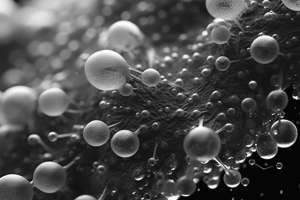
The answer is B, osmosis. Osmosis is a naturally occurring biochemical process that allows water containing some organic matter and solids to pass through a membrane barrier. The solids in the liquid become more concentrated after passing through the membrane. Think of a satchel of wine contained in a cheese cloth type bladder that has micropores throughout. Without much pressure, the water seeps through the cheese cloth leaving behind a more concentrated, denser liquid product. Microorganisms such as bacteria rely on osmosis to allow passage of nutrients into their cell.