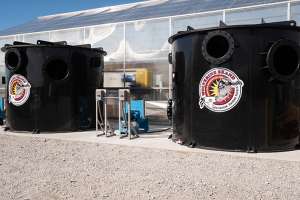
In Duluth, Minnesota, an innovative project aims to repurpose the heat from millions of gallons of treated wastewater discharged daily into the St. Louis River. Spearheaded by a local nonprofit, the initiative seeks to convert the approximately 90-degree effluent into a renewable energy source for local heating.
With a $700,000 federal grant, the project plans to use a network of underground pipes and pumps to distribute the wastewater's heat to hundreds of homes in the area. This method has precedents in countries like Finland, Denmark, and China but represents a novel approach in the U.S.
Man Rescued from Manhole in Virginia
In Richmond, Virginia, a dramatic rescue recently unfolded when a man fell 40 feet into a manhole near condemned silos. The incident prompted a swift response from local first responders.
Local authorities said that the site was an active construction area, secured by fencing, raising questions about the man's presence there. Fortunately, the man had his cell phone and was able to call for assistance, though it took rescue teams over an hour to find and safely extract him using a rope.
MIT Develops Tool to Forecast Future Hurricane Flood Risks
MIT scientists recently unveiled a pioneering method designed to forecast the extent of flooding coastal cities might face due to hurricanes in a changing climate. This tool, which uses New York as a prototype, indicates that the kind of flooding seen during Hurricane Sandy in 2012 could occur approximately every 30 years by the end of this century.
The methodology focuses on compound flooding, where storm surge and rainfall combine to exacerbate the overall flood impact — a scenario vividly illustrated by Hurricane Sandy's devastation. Read more about it here.