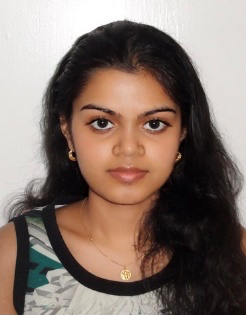
The Water Environment Federation has announced that Eshani Jha is the winner of the 2021 U.S. Stockholm Junior Water Prize for her method to use modified biochar for the removal of toxic contaminants from water.
Jha won $10,000 and will represent the United States at the international competition in August.
Students from 43 states, Armed Forces Abroad and Puerto Rico competed in the national finals during a virtual event. The Stockholm Junior Water Prize is the nation’s most prestigious youth competition for water-related research and aims to increase students’ interest in water issues and careers. The competition is open to projects focused on improving water quality, resource management, protection, and drinking water and wastewater treatment.
“The passion, creativity and skill on display during the Stockholm Junior Water Prize competition is both impressive and inspiring,” says WEF President Lynn Broaddus. “WEF is proud to support these students as they continue to identify and explore solutions to the challenges facing our global water environment.”
Jha — a student at Lynbrook High School in San Jose, California — developed a method to use modified biochar for the removal of toxic contaminants from water. Her research aimed to remove contaminants by manipulating biochar surface area, controlling chemical composition and catalytic properties for oxidative breakdown, adding surface complexing agents, and modifying intrinsic pore size. Results indicate that the modified biochar removed over 94% of pesticides, 53% of pharmaceuticals, 95% of microplastics, and 96% of heavy metals within 10 minutes.
Runners up
Runner-up Jessica Yan — a student at The Mississippi School for Mathematics and Science in Starkville, Mississippi — developed a method to reinforce lignin foams to increase absorption of heavy metals and oil. She improved lignin foam strength by adding plastic polymers from recycled plastics and increased the adsorption capacity of the foam by adding wood waste-derived activated carbon. The foam strength improved by more than twelvefold and adsorption capabilities improved by 10%. Yan received a $1,000 prize.
Runner-up Julius Yoh — a student at Manhasset Secondary School in Manhasset, New York — developed a process for the optimization of desalination and ion removal rates in an electrodialysis system. He integrated three novel turbulent designs into an electrodialysis module to assess the effect of fluid turbulence on ion removal rate and total conductivity difference. Analysis confirmed statistical significance within the designs through facilitating greater ion removal and efficiency for briny water. Yoh received a $1,000 prize.
The Bjorn von Euler Award for Innovation in Water from Xylem, Inc. went to Junzhi Xie of Richard Montgomery High School in Rockville, Maryland. Xie developed an method for removing microplastic particles from wastewater using phytoremediation. The project exposed the plant duckweed to a variety of microplastic levels. Assessment shows the duckweed successfully removed a significant proportion of microplastics at all experimental concentrations. The majority of recovered particles were absorbed onto the surface roots and fronds of duckweed, with little evidence of accumulation inside the plant.
The James L. Condon Recognition for Environmental Stewardship went to Shemai’ya Peak, a student at Stanhope Elmore High School in Milbrook, Alabama. Peak conducted an experiment on how to effectively convey the importance of water conservation and investigate how free-flowing channels of water and manmade/stationary bodies of water differ in pH and light absorption. She also gauged the ability of the water bodies to absorb light at different wavelengths, consequently determining their health status.
In the U.S., WEF and its member associations organize the regional, state and national competitions with support from Xylem Inc., which also sponsors the international competition. For more information on the Stockholm Junior Water Prize, click here.