The wipes industry, represented by INDA and EDANA, has announced the latest edition of a code of practice titled “Communicating Appropriate Disposal Pathways for Nonwoven Wipes to Protect Wastewater Systems.”
The guidelines now include seven rigorous flushability tests developed by industry experts, and update the labeling code of practice with a “Do Not Flush” symbol for wipes that don’t meet industry guidelines for flushability.
New labeling guidance for non-flushables
Wastewater operators across America and Europe are facing challenges associated with clogs due to aging infrastructure, fatbergs and the improper flushing habits of many consumers. Numerous findings, including a 2017 study by Water UK, show consumers flush too many products not designed to be flushed. A 2016 report out of New York found that 98 percent of material collected from wastewater treatment plant screens consisted of non-flushable items like baby wipes, paper towels, feminine hygiene products and household cleaning wipes.
To help consumers and communities reduce the burden to wastewater infrastructure, INDA and EDANA are introducing the updated code of practice. This new edition requires that non-flushable wipes display the “Do Not Flush” symbol on wipe packaging so it's viewable on shelf at the point of purchase and visible each time a wipe is removed from its dispenser package.
Pilot programs conducted by wastewater organizations in cooperation with INDA have demonstrated that focused consumer awareness campaigns can reduce the improper flushing of baby wipes by around 50 percent.
“The prominent ‘Do Not Flush’ symbol on non-flushable products like baby wipes will help raise awareness of the importance of why these products should be thrown in the trash — not flushed,” says Pierre Wiertz, general manager of EDANA.
Enhanced flushability criteria
Flushable wipes are designed to be compatible with household pipes and with municipal and home wastewater collection and treatment systems. Flushable wipes are designed to stay strong in use, have a mechanism to weaken after flushing, and degrade biologically in wastewater treatment systems. However, baby wipes, cleaning wipes and other non-flushable wet wipes maintain their strength after being flushed and can be a leading cause of clogs.
The new guidelines serve as a resource for manufacturers and brand owners to ensure their flushable wipes are compatible with existing wastewater infrastructure. Edition Four updates certain test methods and criteria for passing. The tests are grounded in research and testing carried out by INDA members and technical experts with input from wastewater professionals.
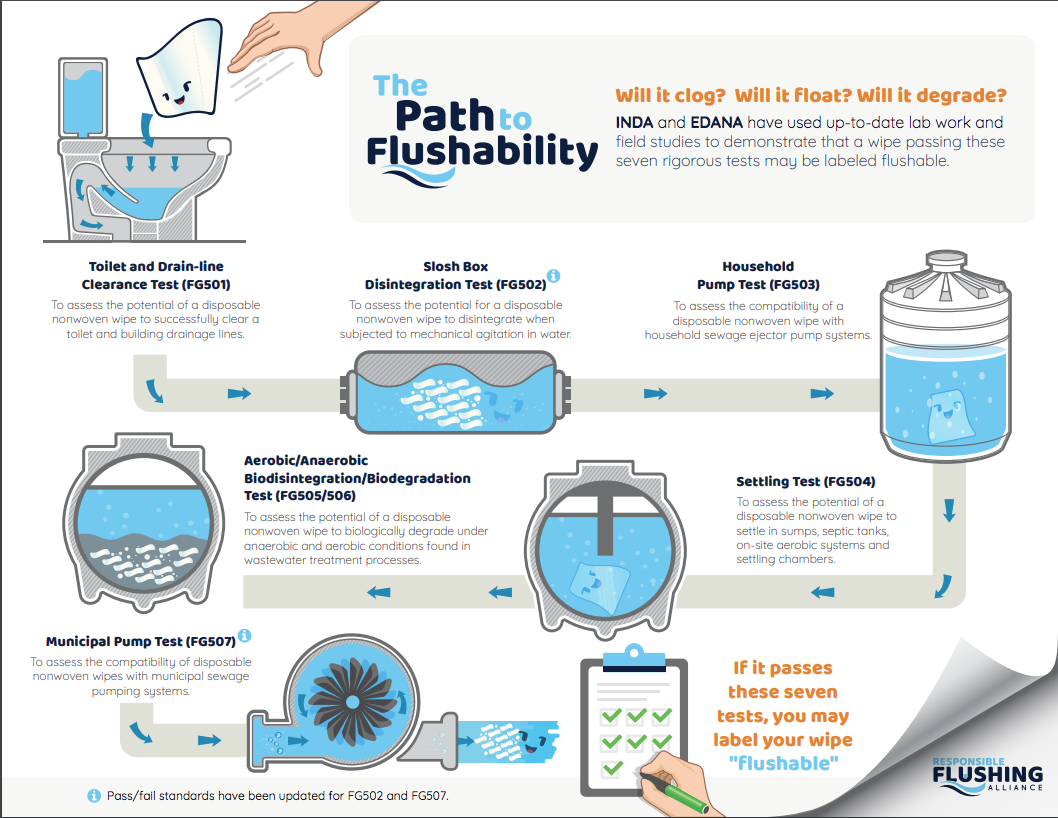
“This update enhances the guidelines for flushable products to ensure continued compatibility with wastewater infrastructure,” says Dave Rousse, president of INDA. The guidelines include seven flushability assessment tests related to performance in pipes, pumps, and both household septic systems and municipal wastewater treatment systems. Products may only be labeled “flushable” if they meet the demands of all seven tests.
Edition Four of the Guidelines and the new Code of Practice for labeling are available to download at no charge from both the EDANA and INDA websites. Full and individual test methods are free to INDA and EDANA members and available for a fee to nonmembers. For more information about flushability issues, visit www.responsibleflushingalliance.com.