Despite its remote location and harsh conditions, Antarctica boasts a human population larger than some municipalities. With about 40 permanent research stations, the continent is home to about 1,000 people at any given time. During Antarctica’s summer months, that number can balloon to 4,000.
And with humans, comes human waste. Studies dating back to 2009 revealed potential problems with how that waste was being handled, namely its effect on Antarctica’s marine life. For example, scientists with the Australian Antarctic Division discovered signs of antibiotic resistance among seals and penguins.
“We don’t know what the long-term implications of that might be, but it’s probably not a good thing,” says Dr. Jonny Stark, an ecologist with the Australian Antarctic Division, in a report by the Australian Broadcasting Corporation.
Stark says antibiotic resistance could have only come from exposure to human pollution. He and his team also found fish with deformed gills and livers as part of a study that examined the wastewater outfall of Australia’s Davis Station. The study was recently presented at a meeting of countries involved in the Antarctic Treaty.
Under the treaty, which was created in 1961, wastewater discharge into Antarctica’s coastal waters is permitted as long as conditions exist for initial dilution and rapid dispersal. Many stations — 37 percent according to a 2008 study — still don’t have treatment facilities, and instead discharge macerated wastewater directly into the ocean. The Davis Station did just that from 2005 — when its treatment plant broke down — until 2013 — when the original plant was replaced with a secondary treatment process.
“The studies that we did were a really good opportunity to evaluate and assess the minimum requirements of the Antarctic Treaty, and we basically found that they’re probably ineffective in limiting environmental impacts from ocean outfalls,” says Stark.
Stark’s team detected sewage bacteria up to a mile away from the Davis Station outfall.
“While the impacts of this outfall may seem insignificant in the context of the whole of Antarctica, in reality it has potentially far greater consequence,” Stark wrote in an article for Issues magazine. “Coastal ice-free areas are extremely rare in Antarctica, constituting less than 0.01 percent of the continent. These areas are where human activities (research stations) are concentrated and are also important habitat for wildlife.”
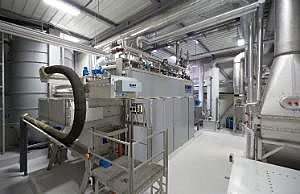
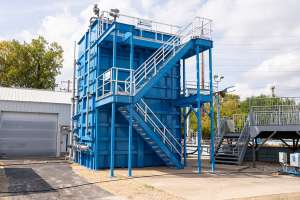
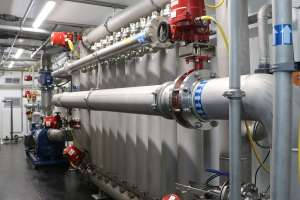
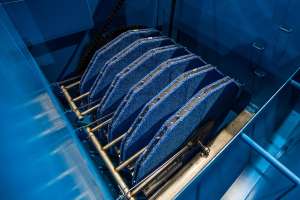
A new advanced treatment plant set to go online this year at Davis Station could help change the treaty’s minimum wastewater standards and inspire other research stations to upgrade treatment facilities. The Australian Antarctic Division has been developing and testing the plant for five years. The plant produces a drinking-water-quality final product, which means it could lesson the environmental impact of the research station while providing an energy-efficient drinking water supply. Currently, water is desalinated from a hypersaline tarn, which is cold, so a lot of energy is required to heat it before treatment.
“Recycling the wastewater would probably save something like about 70 percent of the energy used to make the drinking water down there,” says Stephen Gray, the director of the Institute for Sustainability and Innovation at Victoria University and part of the team that developed the treatment plant.
The Australian Antarctic Division is conducting research to determine how willing expeditioners would be to drink recycled wastewater.
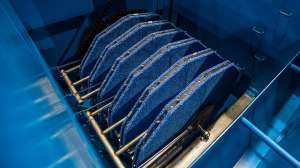
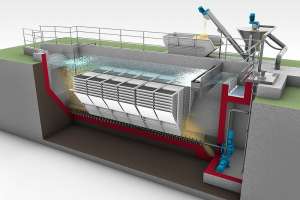
In the advanced treatment plant, effluent from the existing secondary treatment process at Davis Station will undergo ozone disinfection, ultrafiltration, passage through a biologically activated carbon filter, reverse osmosis, ultraviolet disinfection and chlorination. Gray says the plant is designed to function in rugged conditions, is simple to operate, has low maintenance needs and requires a minimal amount of chemicals. It can also be operated remotely from Australia if necessary. And Antarctica isn’t the only locale where the plant might be a good treatment solution.
“A wastewater treatment plant of this size and capacity could potentially find applications in a wide range of remote communities,” says Michael Packer, an engineer involved with the project, in an article in Australian Antarctic Magazine. “It offers a complete, self-contained, small-scale solution to produce purified recycled water for drinking or non-drinking purposes.”