A bus that’s revolutionary — in a green-energy-sort-of-way — took its maiden journey in the United Kingdom last week. Its fuel comes from sewage and food waste, and despite jokes about the “poo bus,” the public seems somewhat enamored with the clean-energy concept.
The Bristol-to-Bath Bio-Bus runs on biomethane produced through anaerobic digestion. Government leaders hope the fuel, which produces 30 percent less greenhouse gas than traditional diesel-powered engines, will ease city pollution problems.
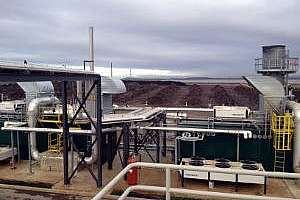
But the Bio-Bus is just part of the renewables puzzle in the U.K. According to a Wired.com report, a new plant, operated by GENco, a Wessex Water subsidiary, now delivers enough gas to the national grid to power 8,300 homes. The plant, which can produce 17 million tons of biomethane per year, includes a fueling station for the Bio-Bus.
Although the Bristol bus is the first of its kind in the U.K., it isn’t entirely novel. Biomethane buses are already used in other European cities including Oslo, Norway, where 200 such buses wind through the streets. In Sweden, more than half of the gas used in 11,500 natural gas vehicles is biomethane. And Germany and Austria have explored the fuel, establishing targets of 20 percent biomethane in natural gas vehicle fuel.
In the U.S., similar technology — based on deriving fuel from wastewater — is taking shape in California. According to a feature in Scientific American, FuelCell Energy is converting wastewater to electrical power and renewable hydrogen for transportation fuel. There, a tri-generation system converts biogas from the Orange County Sanitation District into electricity and hydrogen, producing enough hydrogen to supply 50 fuel-cell vehicles per day.
The future might be here for this renewable technology: Hyundai Motor Co., Toyota Motor Corp., and Honda Motor Co., have each announced plans to launch fuel-cell vehicles within the next year.
From the Bio-Bus to California’s hydrogen-based fuel, sewage will continue to play an important role in clean energy.
Could a Bio-Bus be headed to a bus stop near you? Let’s hope the answer is “yes.”