You’ve heard of coarse and fine bubbles for aeration in secondary wastewater treatment. Now there are nanobubbles, promising new capabilities.
Unlike fine and coarse bubbles, which emerge from diffusers in a basin bottom and ultimately float to and escape at the surface, nanobubbles largely stay entrained in the wastewater stream and do a variety of good work.
Nanobubbles typically measure about 100 nanometers in diameter, invisible to the eye and 2,500 times smaller than a grain of table salt. For perspective, fine bubbles measure about 2 mm. Nanobubble technology can enhance the performance and productivity of wastewater treatment and industrial processes. Cost-effective and chemical-free, it has been shown to improve resource recovery while helping to improve the health of water resources.
Among providers of nanobubble technology is Moleaer, a company with some 1,500 installations in more than 30 countries. Andrea White, applications engineer leader, talked about the technology and its applications in an interview with Treatment Plant Operator.
What is different about nanobubbles for water and wastewater treatment?
White: When you think about nanobubbles, you can throw out everything you know about large air bubbles. Nanobubbles are in a class of their own in how they can be applied to improve things such as process performance, aeration efficiency and removal of surfactants and colloids such as FOG. They are also useful for enabling phase separation, and they have oxidative and electrochemical properties.
How do nanobubbles improve aeration efficiency?
White: Surfactants coat bubbles of all sizes. If you have bubbles trying to deliver oxygen to a biological process, and you have a high concentration of surfactants as is typical in municipal and industrial wastewater streams, those surfactants will coat the larger bubbles and impede the transfer of oxygen to the wastewater. Nanobubbles also become coated with surfactants, but their job is not to transfer oxygen. Their job is to remove the surfactants and in doing so enable an aeration system to transfer oxygen to the process more efficiently.
How much more efficient can the oxygen transfer become?
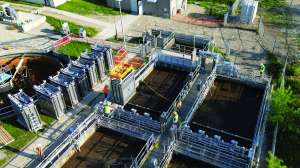
White: We see 30% to 60% improvement in oxygen transfer when nanobubble technology is applied to processes such as membrane bioreactors or conventional activated sludge treatment. This results in payback periods on the order of two to five years. In an MBR, nanobubbles can enable operation at a much higher mixed liquor suspended solids concentrations, which means more wastewater can be treated in a smaller footprint.
So nanobubbles are used in concert with conventional fine bubble aeration?
White: Yes, and they can be used in many other settings. For example, an industrial discharger could inject nanobubbles into a dissolved air flotation system to improve separation of solids and removal of COD before discharge. Some of the bubbles then remain in the liquid discharged to the collection system, and because they have an oxidative property, they can do things such as oxidize hydrogen sulfide for odor and corrosion control.
Could the technology be applied specifically for odor control?
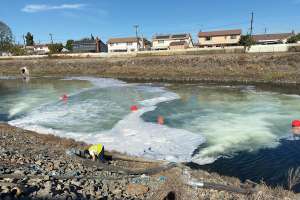
White: Yes. For example, in Los Angeles County, we deployed nanobubble generators to address an odor issue in the Dominguez Channel caused by hydrogen sulfide. Because nanobubbles have oxidative properties and the ability to transfer gas efficiently, we were able to devise a side stream treatment. We pulled a side stream off of the channel and returned it after injecting nanobubbles. The nanobubbles oxidized the hydrogen sulfide and other compounds that were consuming oxygen, and also transferred oxygen from the compressed air supply into the channel. The result was to raise DO and ORP to levels high enough to prohibit hydrogen sulfide formation.
Where can nanobubble technology be deployed in a typical wastewater treatment process?
White: It can be applied anywhere in the process, from the headworks down to the disinfection system. At each process step along the way, we’re identifying distinct value that is created.
What are some other potential benefits of nanobubble technology?
White: A system where operators want to inhibit E. coli growth or enhance E. coli removal could use the nanobubble generator to provide that effect. It’s a chemical-free means of providing additional disinfection or improving the efficacy of a disinfection system. In another instance, surfactants affect biomass kinetics. So by removing them, you not only improve the transfer of oxygen but also grow more aerobic biomass, enabling more efficient removal of BOD and ammonia.
From a mechanical perspective, how does the technology work?
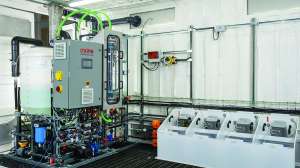
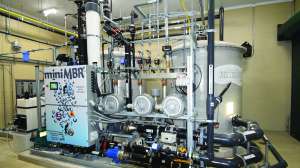
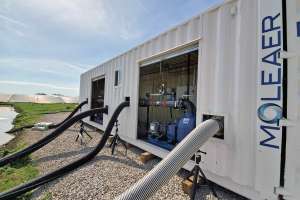
White: The core technology is the nanobubble generator, which has no moving components. It can be installed with existing pumping systems. A gas supply is also connected; essentially any gas that can be safely compressed. The generator creates the hydraulic conditions required to form the nanobubbles. Package systems are available for customers who may not have their own gas supply or pumping systems.
Can this technology be retrofitted to existing treatment systems?
White: Yes. We certainly can design around greenfield facilities, but most of our projects are retrofits, such as looking to identify the best location to install a nanobubble generator in an MBR or to improve solids separation. The further upstream the technology is installed, the more processes receive the value of nanobubble injection. We do research to identify both the impact of the nanobubbles on water quality and water chemistry, and the impact of the water quality and water chemistry on the nanobubbles. There’s an optimization step in the design where we can manipulate the nanobubble generator operation to get the desired effect.
Where do the savings come from that give this technology attractive payback?
White: Most of the time the savings are associated with a reduction in aeration energy. But there are also savings available from wastewater intensification. So for example, if you’re able to treat more wastewater in fewer aeration basins and therefore can take basins offline, you can decrease the usage of chemicals, such as ferric chloride. In industrial wastewater, more efficient BOD and TSS removal can reduce the sewer user fees they paid to the municipality. But typically the bulk of the savings come from reduction in energy usage.