WASTEWATER
By Rick Lallish
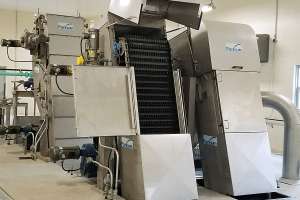
What part of a gravity belt thickener clears a path on the belt where the water falls freely through the belt?
A. Polymer inlets
B. Linear tension rods
C. Chicanes
D. Rivets
Answer: C. Gravity belt thickeners are very effective in thickening sludge for further conditioning before land application. They can achieve 0.4-8% solids, and sometimes higher. The devices remove water from the chemically conditioned sludge as it moves across a woven or porous belt. Chicanes are placed along the width and length of the belt. In addition to clearing a path, the chicanes assist in rolling the material, allowing the more filtrate to flow out. Thickening is a common subject on wastewater certification tests. Learn more in the WEF textbook, Wastewater Fundamentals II – Solids Handling and Support Systems, Chapter 2.
DRINKING WATER
By Drew Hoelscher
What type of flowmeter uses pressure differential to measure flow rate?
A. Velocity flowmeter
B. Venturi flowmeter
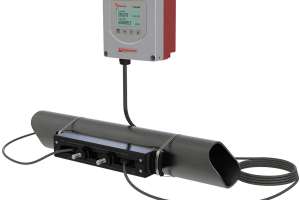
C. Ultrasonic flowmeter
D. Magnetic flowmeter
Answer: B. Venturi flowmeters rely on the pressure differential created as water flows through a pipe with changing cross-sectional areas. A pressure drop is created as the water passes through a reduced cross-section in the piping system. After the pressure difference is created and measured, the water flows through a pressure recovery section (increased cross-section) where up to 80% of the differential pressure generated is recovered. Venturi meters are commonly used to measure effluent flows from larger treatment plants.
About the authors
Rick Lallish is water pollution control program director and Drew Hoelscher is program director of drinking water operations at the Environmental Resources Training Center of Southern Illinois University Edwardsville.