No one questions the importance and success of the Clean Water Act. It has without a doubt led to better technology, better processes, cleaner water and improved public health.
But after 47 years, are the Clean Water Act’s provisions up to today’s challenges — like nutrients, climate change and emerging contaminants such as pharmaceuticals and per- and polyfluoroalkyl substances (PFAS)? How well does its command-and-control approach work in the modern world? Are we using a mid-20th-century framework to address 21st-century problems?
The National Association of Clean Water Agencies argues that this is in fact the case. “The time has come to modernize the clean-water paradigm in a way that preserves the strongest and most successful aspects of our current structure while creating a new suite of tools and resources to address the water-quality realities of today and those of the coming decades,” a NACWA issue paper states.
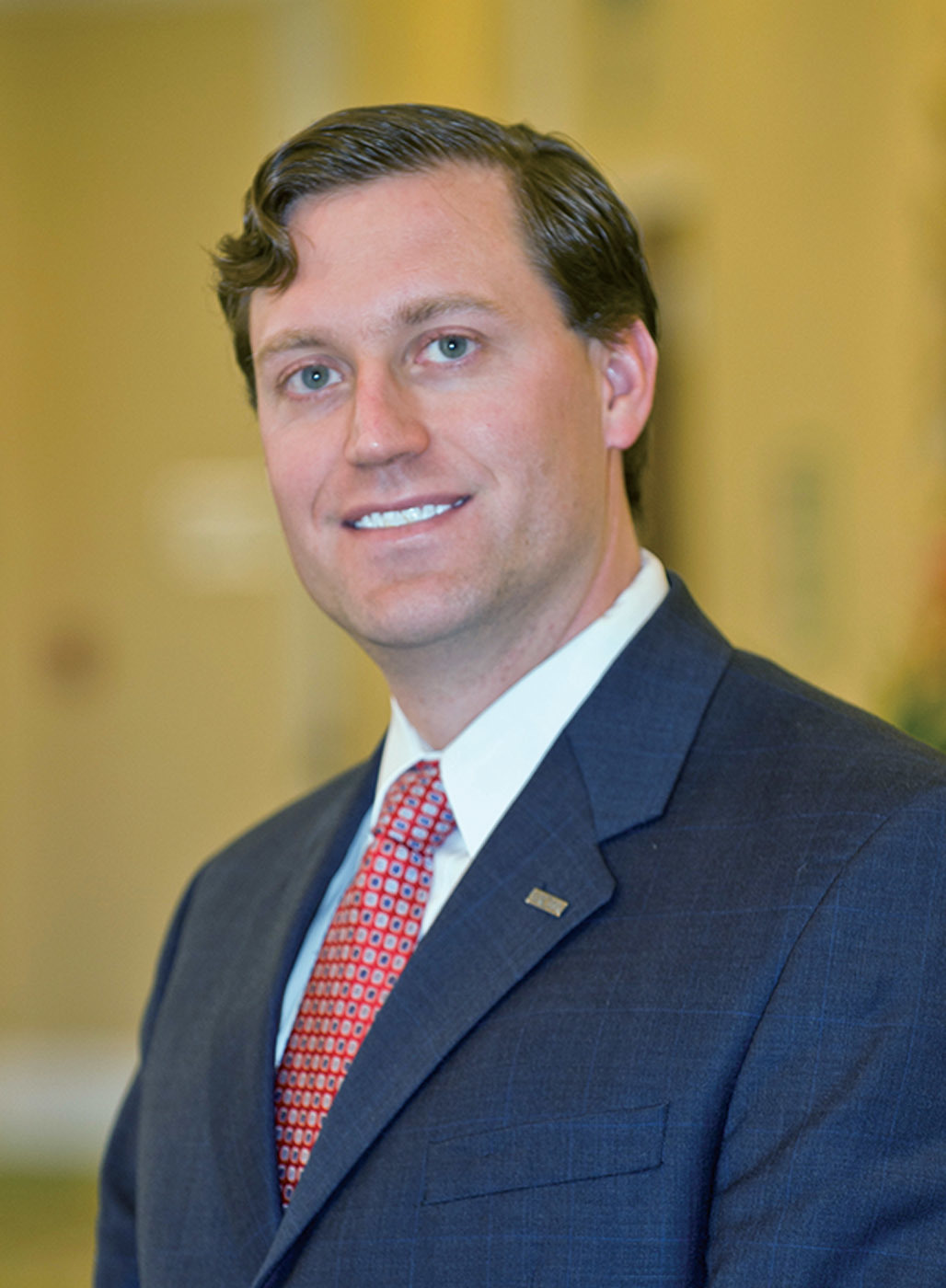
To NACWA, that means developing a statutory construct that takes a holistic “one water” approach to regulation. It also means making utilities’ relationships with regulators more collaborative, and engaging stakeholders and the public in new ways to elevate the importance of clean water. Nathan Gardner-Andrews, NACWA’s chief advocacy officer, talked about these issues in an interview with Treatment Plant Operator.
TPO: What exactly do you mean by taking a more holistic approach to regulation?
Gardner-Andrews: If you talk to different stakeholders involved in water quality — municipal utilities, agriculture, industries, citizen groups — everyone gets on a conceptual level that addressing pollutants from a watershed approach, rather than discharge by discharge, could lead to overall better water quality. The challenge is how to change the laws and regulations to reflect that.
TPO: What makes that so challenging?
Gardner-Andrews: What we have, at least at the federal level, is a system that’s very siloed. We have one major statute, the Clean Water Act, that deals with wastewater issues. We have a separate federal statute that deals with safe drinking water and other statutes like the Endangered Species Act that can cross over into water issues. Within the Clean Water Act, we have classes like point sources and urban stormwater. Certain farm operations are regulated under the NPDES point-source discharge program, and an entire universe of impairment sources are not regulated under the act. Getting to a new framework means changing decades of how water is regulated, how permits are written and how discharging utilities operate.
TPO: What might a watershed-based program look like?
Gardner-Andrews: We would envision a federal statutory and regulatory framework that doesn’t differentiate between drinking water, wastewater and stormwater but looks at water as one entity. From sixth grade science, we all know about the water cycle. We need a structure that acknowledges that any ecological challenge in a watershed has impacts across the board. It’s a structure that breaks down the silos and also looks at all sources of impairment in a watershed — agricultural, industrial, municipal, air deposition. Then it looks at all the uses of water in a watershed — drinking water, irrigation, recreation; integrates the water-quality challenges around those uses; and determines the best way to make trade-offs among all those to find an optimal balance of environmental and health protection and the uses of the resource.
TPO: You assert that a paradigm such as you describe would encourage innovation. In what way do you see that happening?
Gardner-Andrews: I would argue that the Clean Water Act is the most successful of all environmental statutes, but it hasn’t been fundamentally updated to acknowledge the realities of the 21st century. For example, when the drafters wrote the bill, climate change was not on anybody’s radar screen, yet it is now arguably the defining environmental issue of our time. None of the issues that go with climate change — rising sea levels, changing precipitation patterns, hardening of facilities against these threats — are addressed in the act.
Issues like climate change, resiliency, toxics and nutrients present opportunities for utilities to innovate and find new ways to address them, whether through technology or new management approaches. A new paradigm could give them the regulatory flexibility to do that.
TPO: Can you offer an example to illustrate?
Gardner-Andrews: Consider nutrients. You can have a body of water that’s impaired by nutrients, yet the impairment has nothing to do with a wastewater treatment plant — it’s all due to upstream agriculture. And yet, all the U.S. EPA and the states can do under the Clean Water Act is ratchet down that point source to lower and lower levels, when that’s not solving the problem.
TPO: Isn’t it true that some states are addressing upstream nutrient issues with adaptive management and other approaches?
Gardner-Andrews: Yes, some places are pushing the envelope with adaptive management and nutrient trading, but that isn’t changing the targets utilities are being asked to hit. We’re still setting targets for point sources to meet that may not be rational targets. Under a holistic approach, we could set water-quality standards that more equitably distribute responsibility for accommodating the designated uses of the water resources while sharing the benefits among all the interested stakeholders.
That’s where innovation comes in, and there are technologies that could help us get there. They’re not necessarily technologies to put in at the treatment plant to get to a certain limit. We could ratchet down discharge limits further and further, and creative companies and engineers would come up with new technologies to meet them, but at the end of the day, is that really improving water quality? In many places, the answer will be no.
TPO: How would you describe your desired relationships between utilities and regulators?
Gardner-Andrews: Municipal utilities have done the hard work over the years to make the Clean Water Act the success it has been. They have made the investments in their plants. Sometimes the federal and state governments have had to nudge or force them along, but by and large they have done their part. In addition, many utilities have successfully run industrial pretreatment programs for years, and that is a regulatory function.
There will always be a role for the federal and state governments to provide oversight, but we would like to see that done not in an antagonistic way but in partnership. The utilities would sit down with their regulator and say, “Here is where we know we need to improve. Here are our priorities over the next years.” The regulator would say, “Here are our concerns about water quality and where we need to see improvement.” Then they would jointly decide where to make investments to enable progress.
TPO: What do you believe it will take to make such an approach a reality?
Gardner-Andrews: First it takes a mindset shift among utilities to see the regulators as partners in achieving a common goal, which is best balancing the needs of the water body versus the desired uses, while also looking at cost. Sometimes a utility may know better than the regulators where that investment sweet spot is. The flip side is that the regulators also need to look at utilities in a partnership. There needs to be a relationship of trust and common purpose. Then you can start creating a more symbiotic relationship.
From the utility side, it becomes less about what is being done to me and more about how I work collaboratively and proactively with my regulator so the next permit that comes down isn’t a surprise — it’s something I had influence in crafting. Then I can feel confident that the things I will be required to do, and that I will be asking my community to pay for, are things that really improve the environment and public health.
TPO: Engaging the public around the importance of clean water is always a challenge. How does NACWA propose to do that as part of setting a new regulatory paradigm?
Gardner-Andrews: Some key milestones now and over the next few years create an opening for communications to elevate the message. This year is the 50th anniversary of the Cuyahoga River fire, the galvanizing moment for the modern environmental movement. Next year is the 50th anniversary of Earth Day and of NACWA. In that context, we plan to celebrate the amazing success of clean-water utilities in terms of water quality, fishable and swimmable waters, and economic impact — the jobs and other benefits created by communities having fresh, safe water. Then in 2022 we have the 50th anniversary of the Clean Water Act itself.
TPO: How will that help lead to the new regulatory paradigm that NACWA envisions?
Gardner-Andrews: It all comes down to the general public — the average Joe and Jane — understanding the value of what utilities do and understanding the value of the money and what they’re getting for what they pay. If we can elevate the message and get the public to buy into and understand it, then the policymakers will follow. We can make the next three years a celebration of clean water and help the public understand how much work, effort and money go into that.
Utilities have to do a better job of telling their story. Think about how schoolteachers, firefighters and police officers are honored for the services they provide. There is no reason the folks who work at the water or wastewater utility shouldn’t be viewed in the same light. Utilities need to be more loud and proud about what they do. Once the public starts to recognize their contributions, the respect will come. But it doesn’t happen overnight. Through our membership, we’re going to put together collateral, videos, social media and other items to spread far and wide to any utility that wants to localize and use them. If you localize the story, you begin to develop a national coalition and voice that will push the issue globally.