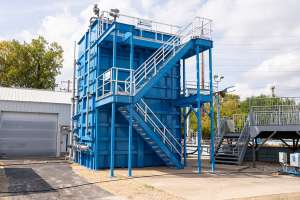
Hundreds of volunteers mobilized April 15 in Manawa, Wisconsin, to protect the city’s wastewater treatment plant as flooding spread across Waupaca County. Beginning at 5 a.m., residents, students and neighboring fire crews worked together to fill and stack sandbags, building barriers to prevent costly damage. Local officials say the effort has been effective.
The urgency stems from both the current flood threat and lingering memories of a dam failure two years ago that overwhelmed the system, causing sewage backups and widespread basement flooding. City leaders warn that losing the plant again could result in millions of dollars in damage, while noting this flood appears higher than any in decades.
Watch a video from WLUK News below.
DC Water Faces Federal, State Lawsuits Over Potomac Spill
The Department of Justice and U.S. Environmental Protection Agency have filed a civil complaint against DC Water over a sewage spill into the Potomac River, described as the largest wastewater release in U.S. history. The state of Maryland also filed a lawsuit seeking penalties and damages for costs connected to the spill.
Federal officials allege the utility violated environmental law by failing to properly maintain its system and prevent untreated sewage from reaching waterways and areas with potential human contact. The government is seeking financial penalties and requiring repairs and mitigation work to address the damage. DC Water says it is committed to long-term rehabilitation of the pipeline and is continuing coordination with federal agencies as it advances broader repairs.
Bureau of Reclamation Plans to Cut Water Releases From Lake Powell
Federal and state officials are weighing aggressive drought measures as conditions worsen across the Colorado River Basin. The Bureau of Reclamation said it plans to cut water releases from Lake Powell to 6 million acre-feet, marking its lowest level in decades, while sending extra water from Flaming Gorge Reservoir downstream to stabilize Powell’s levels.
The basin is facing an exceptionally dry year, with snowpack reaching only about a quarter of normal levels, sharply reducing inflows to key reservoirs like Lake Mead and Lake Powell. Forecasts show Lake Powell could receive just 2.78 million acre-feet of water, roughly 29% of average and among the lowest ever recorded, reports The Colorado Sun.
The Bureau of Reclamation acknowledged that the proposed reductions will accelerate the downstream decline of Lake Mead, which is currently near its record low, according to reports.