The powerful atmospheric river that inundated King County, Washington, during the second week of December 2025 caused some of the worst flooding the Snoqualmie Valley has ever seen. In fact, according to KATU TV, “The Snoqualmie River reached its highest level in 10 years this week, surpassing the major flood stage with a flow rate of 45,000 cubic feet per second at 17.8 feet.”
Fortunately, these floods did not cause a severe environmental incident, thanks to the heroic efforts of Tyler Stiltner. He is the senior operator in charge of operations for King County's Carnation Treatment Plant.
When floodwaters overran the roads leading into the City of Carnation (population 2,300), cutting it off from the rest of the world, Stiltner stood fast at the plant. He worked alone around the clock for days, dealing with equipment failures and power outages to keep the facility running. In doing so, Stiltner kept the county’s local wastewater processing system going, protecting his community from an environmental incident. Because the Carnation plant discharges into a local wetland, environmental permits require strict, seven-day-a-week lab analysis of its processed water outflow. Stiltner had to keep an eye on that too.

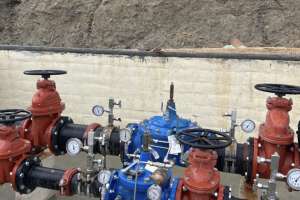
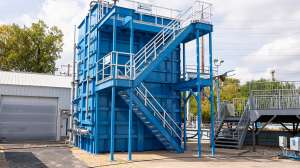
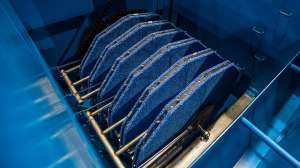
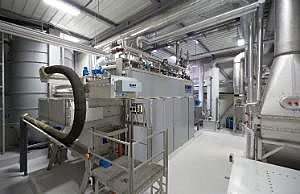
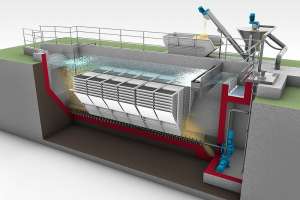
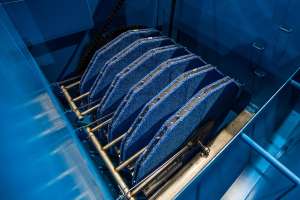
For the record, the Carnation plant uses a membrane bioreactor (MBR) to process its wastewater, which manages about 125,000 gpd. The MBR is fed by a municipal vacuum conveyance system.
Thanks to the floodwaters, “the city itself was an island,” says Stiltner. “There was no way to get in and out. There was no going home." In fact, when the Snoqualmie River exceeded extreme flood levels, the Washington State Department of Transportation closed all roads in and out of the area.
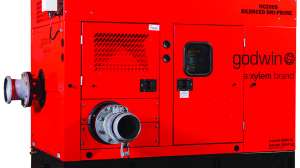
It wasn’t just the floodwaters that threatened operation at the Carnation plant; it was the power. Heavy winds and rain caused frequent power bumps, disrupting its smart plant operations. Although the plant is equipped with an automatic transfer switch and a large generator, the 30-second lag between a blackout and the generator kicking in wreaked havoc on the facility's sensitive systems.
"When that happens, our air compressors tend to be a little bit on the fritz," says Stiltner. "Most of our level controls are run off of our instrument air. So when those go down, we don't have LIT’S that are functioning. So our plant is basically dead in the water if we're not getting that feedback from them."
Because Carnation’s air compressors do not use variable frequency drives, they require manual resets after each power interruption. This meant that Stiltner had to physically run back and forth across the facility, resetting blowers and membranes to keep the system alive.
Now, in normal times, the Carnation plant is unstaffed at night, with its operations being remotely monitored by the South Treatment Plant in Renton. However, with the atmospheric river challenging the entire county's pump stations, the Renton team had its hands full with its own issues. So Stiltner stayed at the Carnation plant for days, relying on a cot, a stove and a refrigerator supplied by the county for such emergencies.
"There wasn't a lot of sleeping," he says. "I basically stayed up and just kept an eye on my process and my alarms and my equipment. I got a couple of short little cat naps in here, but they were pretty few and far between." Food came from a local grocery store that happened to be on the same island, and was just down the street from the plant.
So how did Stiltner manage to stay awake? "The alarm screen is a constant companion, so it's pretty easy to keep yourself occupied watching that," he says. But his multi-day ordeal, which started on Monday, Dec. 8, was an endurance trial. "Oh, absolutely. Absolutely. Yeah, that's probably the best way to describe it."
By late Thursday night, Dec. 11, the Snoqualmie River’s floodwaters began to recede. By Friday morning, the plant’s backup operator was able to relieve Stiltner, and he went home to catch up on four days of missed sleep.
Looking back on his marathon shift, Stiltner takes a pragmatic view of what happened, and notes that flooding comes with the territory in the Snoqualmie Valley.
"I think it's just one of those things we have to live with," he says. "We can't control where the city's built. Obviously there's no redoing that. In the future, we'll just keep doing what we do, keep an eye on the weather forecast, the river levels, and we'll prepare and take it as it comes."