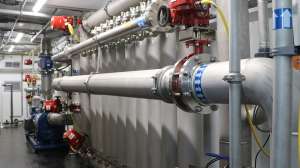
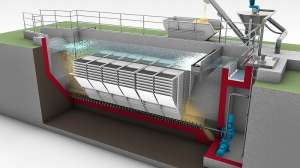
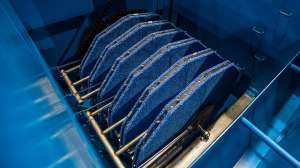
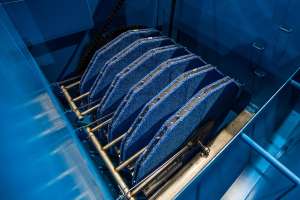
University of Arizona researchers are tackling the state’s worsening drought by developing advanced wastewater treatment and desalination systems through the Water & Energy Sustainable Technology Center. Using reverse osmosis and other purification technologies, the center’s team aims to convert wastewater into safe, drinkable water while reducing dependence on dwindling sources such as the Colorado River and Lake Mead.
Funded in part by the U.S. Army Engineer Research and Development Center, the initiative is part of a $38 million multi-university Water Reuse Consortium that also includes the University of Southern California and the University of Nevada, Reno.
The Arizona team is focusing on sustainable brine management, virus detection, and energy-efficient treatment processes to make large-scale water reuse both practical and affordable.
The effort comes at a critical time, as nearly 6.4 million Arizona residents live in drought-affected areas and the state faces escalating cuts to its Colorado River allocation under federal water agreements. By treating and reusing wastewater for consumption, irrigation and municipal purposes, the researchers hope to create a self-sustaining water cycle that reduces pressure on natural reserves.
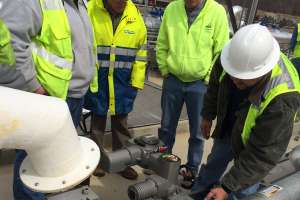
The WEST Center’s innovations have already shown success in mobile treatment units capable of purifying wastewater to drinking standards, demonstrating the technology’s safety and reliability. Researchers emphasize that increasing public understanding and trust in reused water is essential to scaling the technology statewide, potentially securing Arizona’s water future amid a changing climate and intensifying resource scarcity.
Read more about it at the University of Arizona's The Daily Wildcat.