Alarm notification is a critical function in clean-water and drinking water treatment plants.
An effective notification system ensures that information about process conditions is delivered to the right people at the right time — and avoids workload stress by helping to limit false or insignificant alarms.
Now SmartSights has introduced SmartBundle, which combines the functions of the company’s WIN-911 alarm notification offering with its XLReporter industrial reporting functionality, both widely used in treatment facilities.
The company says that the combined offering gives operators a full-field view of operational conditions from anywhere inside or outside the plant, helping them make sound, real-time decisions. It offers insights on process data tailored to key roles from operations to management to compliance.
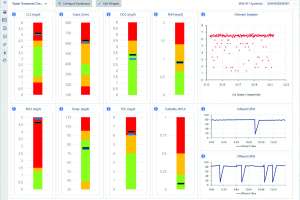
Access to the applications via smartphone or tablet extends the system’s reach and enables timely response. A SmartFocus feature includes snippets of XLReporter information so that operators can monitor critical data without having to search.
SmartBundle is available at Pro and Ultimate license levels. The Pro level allows users to access reports on demand through the WIN-911 mobile app and via email. The Ultimate level builds on that by allowing reports to be pushed from the WIN-911 escalation engine, rather than pulled by users. Cody Bann, director of engineering, talked about the offering in an interview with Treatment Plant Operator.
TPO: How would you define Smart Bundle versus its two separate components?
Bann: By bundling WIN-911 with XLReporter, we are building something that is greater than the sum of its parts. It offers use cases and features that traditional WIN-911 users can’t get without the XLR side of the equation, and vice versa. They may know what WIN-911 does today, and what XLR does today. SmartBundle is the fusion of the two, offering a new realm of capabilities beyond the traditional purview of those applications.
TPO: Can you summarize the benefits of the bundled application?
Bann: There are three parts. One is easier access to reports. By bringing XLR to mobile devices, we increase the scope and applicability of the reports. Second is alarm management. XLR has traditionally done alarm management against a SCADA or a historian application. Doing that against WIN-911 helps focus attention on alarm management, so organizations can save time and cost. And finally we go into the realm of dashboards.
TPO: What is the function of dashboards in SmartBundle?
Bann: These are key process indicator dashboards that supervisors would likely use more than individual operators. Providing snippets of XLR reports inside the WIN-911 dashboard, alongside real-time values about what is going on with alarming, is a powerful feature. Seeing live values about turbidity, for example, correlated with what is happening with current alarm states, makes for a rich dashboard experience available only with the bundled product.
TPO: How do the snippets help operators understand process conditions?
Bann: They provide rich, graphical representations of data. For historical data, line charts allow anomalies and trends to be easily identified, while multi-line charts allow correlations between variables to be more obvious. For real-time data, gauge charts provide context for a value: how close to red or how far in the green.
So, for example, with a line chart, operators can see in an instant the correlation between two key process indicators. And real-time values are placed in context when presented graphically. If you think of a number, you get a lot more meaning at a glance when representing that same number on a gauge. Experienced operators might be able to understand raw figures, but with worker turnover, that additional context is invaluable to newer team members.
TPO: Can you give an example of how this capability is helpful?
Bann: Suppose a plant operator receives an alarm from WIN-911 in the middle of the night. They have to decide: Should I go in? What is really going on? What is the underlying cause? Now our software can push a report with the alarm notification so they have information to understand, for instance, not just that the tank level is low, but here are the inflow and outflow rates, here is what the valves are doing, here is the maintenance that apparatus has received recently. All that information helps them decide whether this is something they must deal with now or can deal with in the morning.
TPO: How does that differ from the way they would have gathered the information otherwise?
Bann: Previously, if they had access, they would go to their laptop and get into an HMI screen to see what that apparatus was doing. Having that information proactively pushed to them along with the alarm notification really does save time.
TPO: How else can this technology improve operating efficiency?
Bann: In terms of alarm management, many organizations are asking how they can reduce their alarm floods. In light of labor shortages, how can they make sure they don’t overwhelm their operators with nuisance alarms? So understanding the drivers of alarm events, and being able to identify assets that are the leading causes of alarms, is very valuable information.
TPO: Does this technology help organizations do alarm management according to ISA 18.2?
Bann: Yes. Many outside consulting firms can help with that, but it is a process where they first have to identify, remedy, reflect, reassess and repeat. We have made it very simple to get all that data in and analyzed. The XLR side of SmartBundle has all the ISA 18.2 metrics calculated. By pointing it at the WIN-911 database, XLR can simply crunch the data. So users are suddenly able to understand and recognize, for example, the top 10 alarm bad actors without doing any work to set up an ISA 18.2 analysis. It’s all there, out of the box.