The East Bay Municipal Utility District aims to be carbon neutral by 2030 and so constantly looks for ways to conserve power and generate its own.
One method under consideration is in-conduit hydropower using a generator in a water distribution pipe. Known as EBMUD, the public water and wastewater utility headquartered in Oakland, California, put a pilot project online in November 2023. It has been generating electricity ever since, using the difference in pressure between pressure zones.
“It’s projected to generate about 175,000 kWh in a year,” says Casey LeBlanc, senior civil engineer and manager for the project.
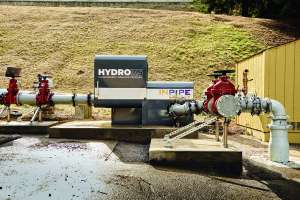
The generator is installed in a bypass around a pressure-reduction valve that cuts the pressure from approximately 90 psi to 30 psi. The installation includes a motor (Nidec Motor Corp.) and a turbine (Cornell Pump Co.) and has the same effect as the pressure-reduction valve. Out of caution, the district staff put the generator in a bypass instead of substituting it for the pressure-reduction valve.
“Installing it in the bypass gives us flexibility for maintenance,” says LeBlanc. “Also, this is a new product, and we weren’t yet comfortable with using it as the sole way for water pressure to be regulated to our customers in the downstream pressure zone.”
“Installing it in the bypass allows us to provide continuous service with or without the InPipe Energy system in service. It was a conservative approach to a new technology.”
EBMUD is California’s second-largest water utility with 1.4 million customers. It covers a hilly territory on the east side of the San Francisco Bay. The hills mean there are numerous pressure zones in the distribution system, and many more points in the network where in-pipe generation might make sense, says LeBlanc.
“We’d like to explore the technology’s feasibility in other locations, and this demonstration project will allow us to collect some performance and operational cost data,” says LeBlanc. “Several locations have hydraulic conditions that may be appropriate for this kind of generation.
“Having a good interconnection arrangement with the electric utility is the second requirement and often harder to meet. We could either use the electricity on site or sell the power to the electricity provider.”
Economically, the greater value comes from using the electricity onsite, but LeBlanc says it’s simpler to connect the generator to the grid. In the pilot project, the power goes to the grid, and the district receives a credit for the power.
“We’re balancing the cost of electricity with our water distribution system operations,” LeBlanc says. “We’re not optimizing for the price of electricity. We’re going to balance it with operational simplicity.”
InPipe Energy, a water technology firm based in Portland, Oregon, approached EBMUD with the idea for the pilot project. The company obtained a grant from the California Energy Commission, and EBMUD chose a location where the bypass would be easy to construct, so the pilot project cost would not exceed the value of the grant.
“We’re very interested in trying new things,” LeBlanc says. “Everything doesn’t have to be grant-funded. We certainly invest in new technologies early on, but in this case, the vendor came to us with a grant that was going to cover the full cost of the project. So we said, ‘Sure, we’ll be a partner with you.’ This one was an easy choice.”
Even so, it took about four years of planning, design, construction and working with the electrical utility to get the pilot project running. Once the system was operating, LeBlanc was surprised to find that the turbine was quieter than the pressure-reduction valve.
“I initially thought the turbine was going to be louder,” he says, “So we had the vendor install sound-attenuating material on the inside of the enclosure. This is in a residential area, and I wanted to be mindful of the nearby residents. But when we have all the water going through the InPipe Energy system, it’s much quieter than our traditional facility.”
LeBlanc is pleased with the results: “In the time we’ve operated the system, we’ve shown that we can serve our customers with safe pressure in addition to generating electricity.”
The pilot is expected to run for two to three years. After that, the district will have plenty of data to decide whether to scale up in-conduit hydro and add it to the arsenal of power generation and conservation projects it will take to meet the utility’s goal of carbon neutrality.
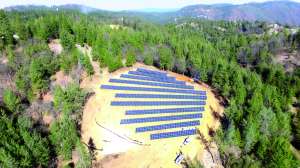
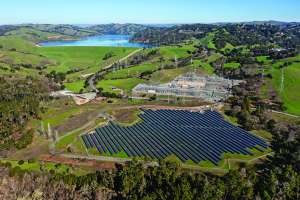
The latest addition is a 4.6 MW solar energy field in Orinda, near the Briones Reservoir. The installation, developed with TotalEnergies, is expected to generate 10 million kWh per year and save $26 million over the 25-year power-purchase agreement.
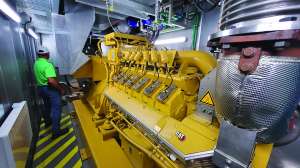
Other renewable energy projects include 40 MW of hydroelectric power produced at district reservoirs, 11 MW from biogas produced in wastewater treatment plant digesters, 2 MW from other solar projects, and additional solar projects under development.
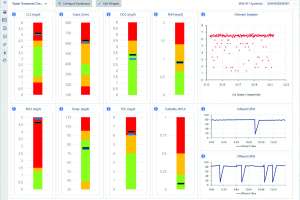
“We are also investigating ways to become more energy efficient with the electricity we use,” LeBlanc says. “We are working with vendors to try new products to improve our pumping station efficiency. We’re working with Suez on an energy management pilot that will help us meet our goal. That’s another way we can become carbon neutral by 2030.”