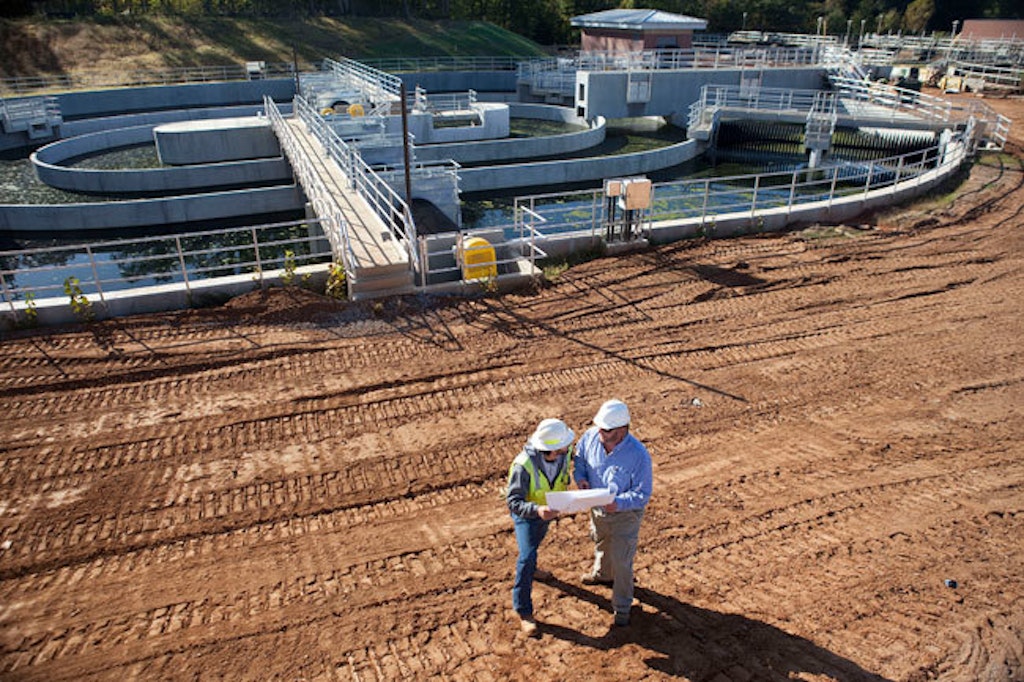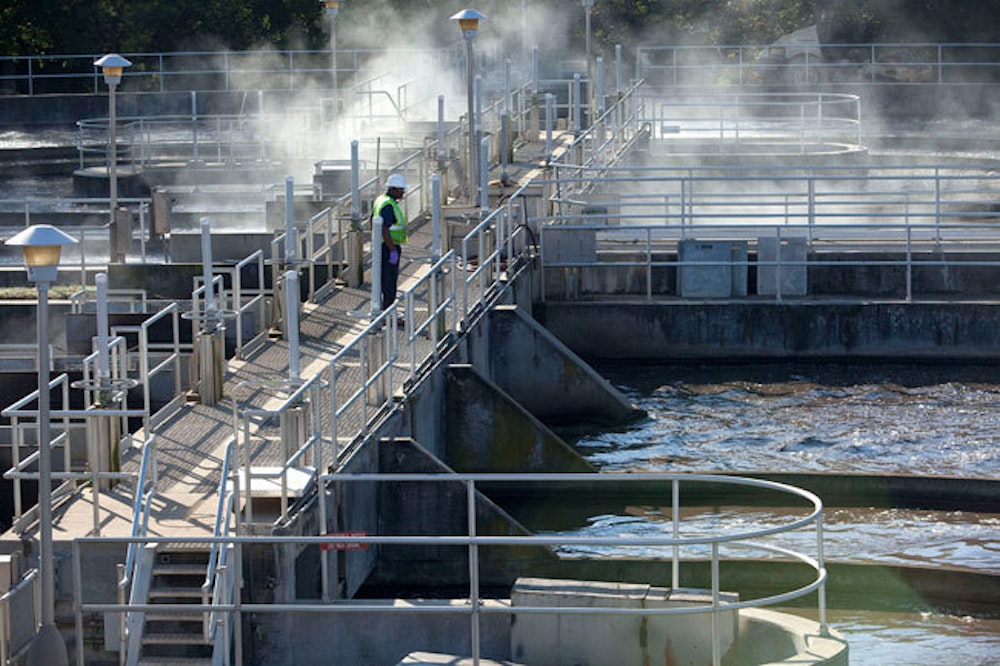
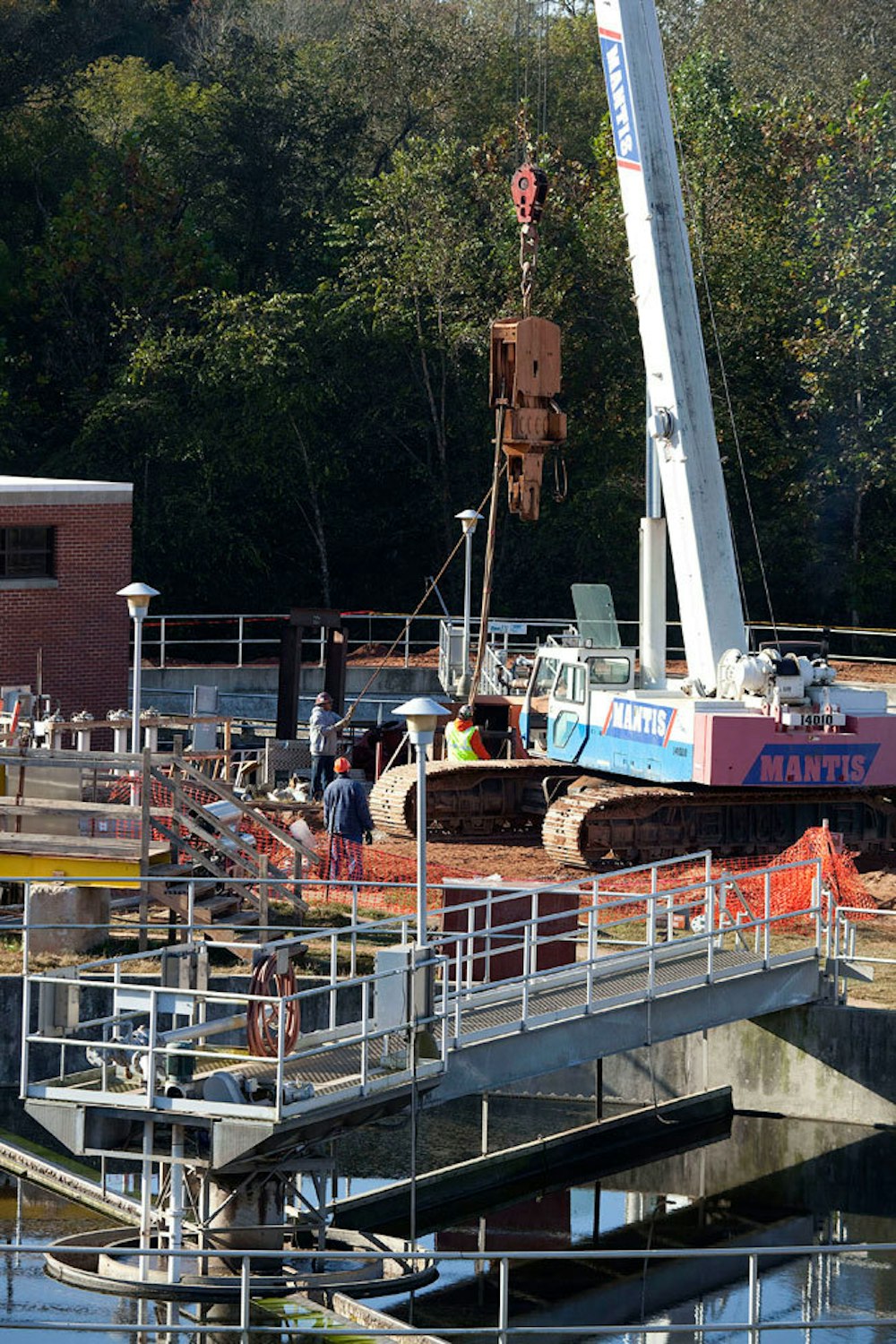
It might not have been the parting of the Red Sea, but the early-morning chlorine contact chamber diversion at the Middle Oconee Water Reclamation Facility in Athens-Clarke County, Ga., was pretty dramatic.
While continuing to operate and maintain compliance during a major construction program, the plant staff and contractor needed to stop plant flow for several hours so one of two chlorine contact chambers could be taken down for conversion to UV disinfection.
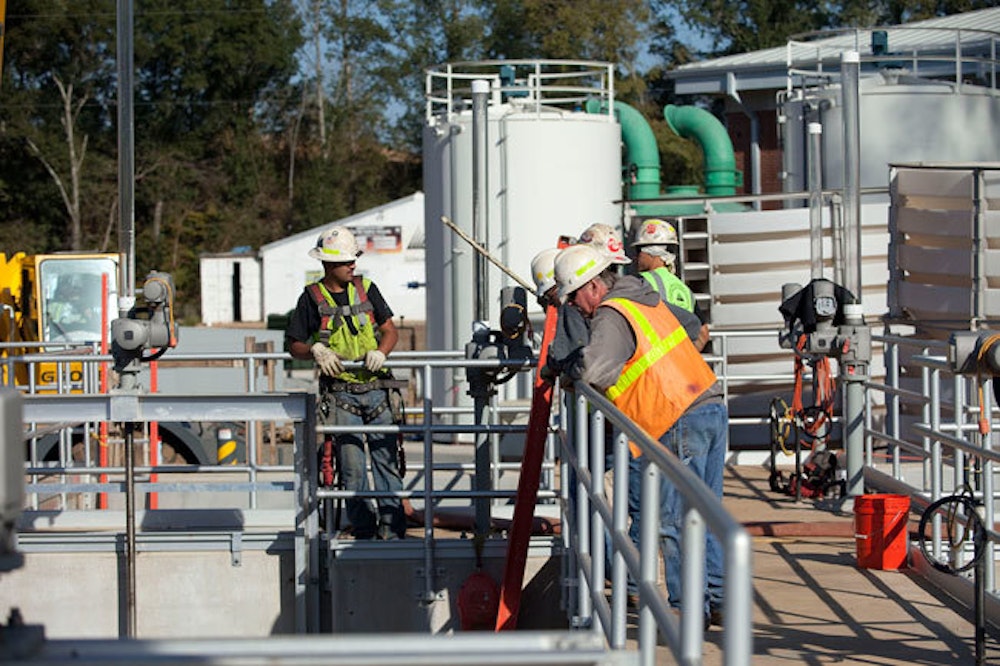
“We worked on a plan several weeks in advance,” says plant operations supervisor Tim Holder. “Everyone knew exactly what to do.” Without the luxury of an equalization basin, Holder’s team emptied one of the oxidation ditches and drew down clarifiers to provide extra storage capacity. Then, in the middle of the night, they stopped flow and the contractor cut and capped pipes, isolating one of the chlorine chambers and started its demolition.
“There was no water leaving the plant for eight to nine hours,” Holder says. “The contractor (Western Summit of Colorado) worked super fast. When the sun came up the next day, we were done.”
It’s just one of many on-the-fly adjustments the staff has made as the plant upgrades treatment to add phosphorus removal and increase capacity from 6 mgd to 10 mgd. It’s also an example of how plant management and the contractor work together. “We’ve had an excellent relationship,” says Holder. “It’s almost like they’re wastewater treatment operators themselves.”
Major project
The Middle Oconee plant project is one of three the Athens-Clarke County public works department is completing at a total cost of about $49 million. The other two are the North Oconee plant, and the Cedar Creek plant.
The original Middle Oconee plant dates to the late 1960s, when it was a trickling filter operation. It was converted to activated sludge in 1990. Today, wastewater travels through a 106-mile sewer system serving a 36-square-mile drainage basin and about 35,000 residents.
When the plant is fully upgraded, the flow will be boosted by four submersible pumps (Weir Specialty Pumps/WEMCO) to a headworks containing JWC 3-mm band screens and a Eutek grit removal system (Hydro International). Then it will pass through an anoxic-anaerobic biological basin for phosphorus removal.
From there the flow will be split among three 2-million-gallon Orbal oxidation ditches (Siemens) for further biological treatment. Three existing 80-foot-diameter clarifiers are being joined by a fourth, 120 feet in diameter. TrojanUV units will disinfect the effluent before discharge to the Middle Oconee River, which flows to a recreational lake downstream.
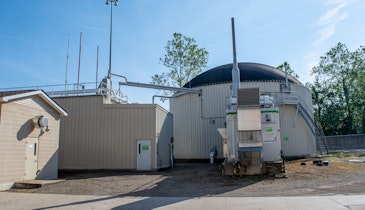
Just recently, Athens-Clarke County began composting its biosolids at the local landfill. At the Middle Oconee WRF, waste solids will be digested in a coarse-bubble aerobic system, followed by centrifuges. Existing units are Sharples (Alfa Laval), and a new Andritz centrifuge is being added. Plant staff can use centrifuges for thickening and dewatering.
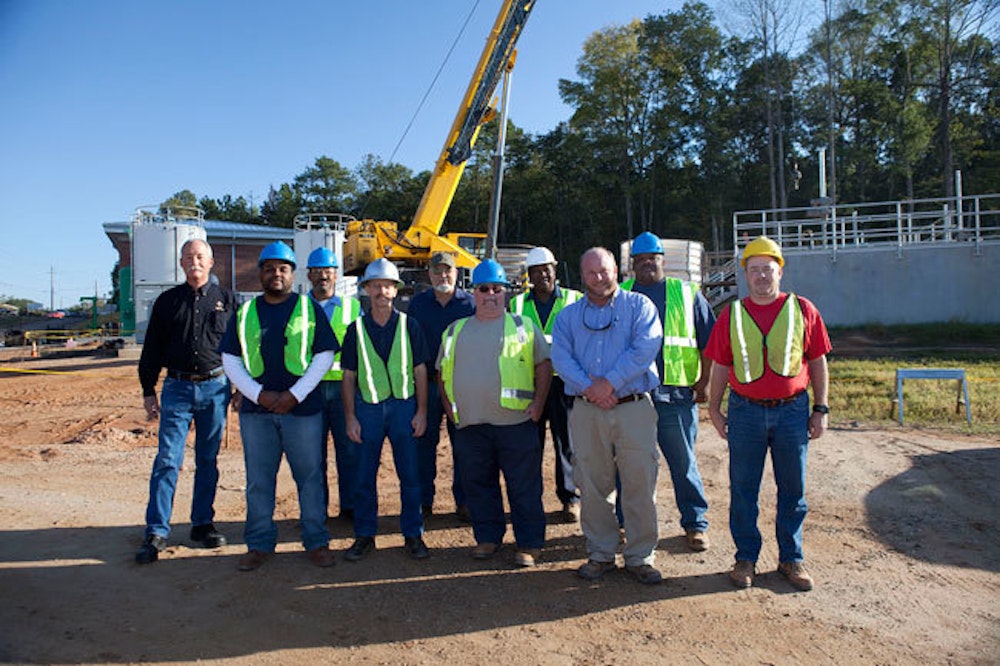
The new plant will have a sophisticated SCADA system, tying all three treatment plants together. Transdyn is the system integrator. The plant staff in addition to Holder includes superintendent Mark Roberts (retiring soon); operations coordinator Dave Bloyer; operators Robert Barrington, Jack Brehm, Charles Cowart, Jimmy Elder, Pat Freeman, Jameson Goolsby, Rex Hatfield, Jim Hanson, Scott Jones and Bomani Wilson; maintenance mechanics Clarence Burgess and Bill Lumpkin; and electricians Jon Cline and Richard Young (shared with the other two treatment plants).


#1 from KSY on March 01, 2011
Unless the electrical systems run correctly, none of it works…Richard Young must know a thing or two about electricity.